A Legacy Rooted in Leadership and Service
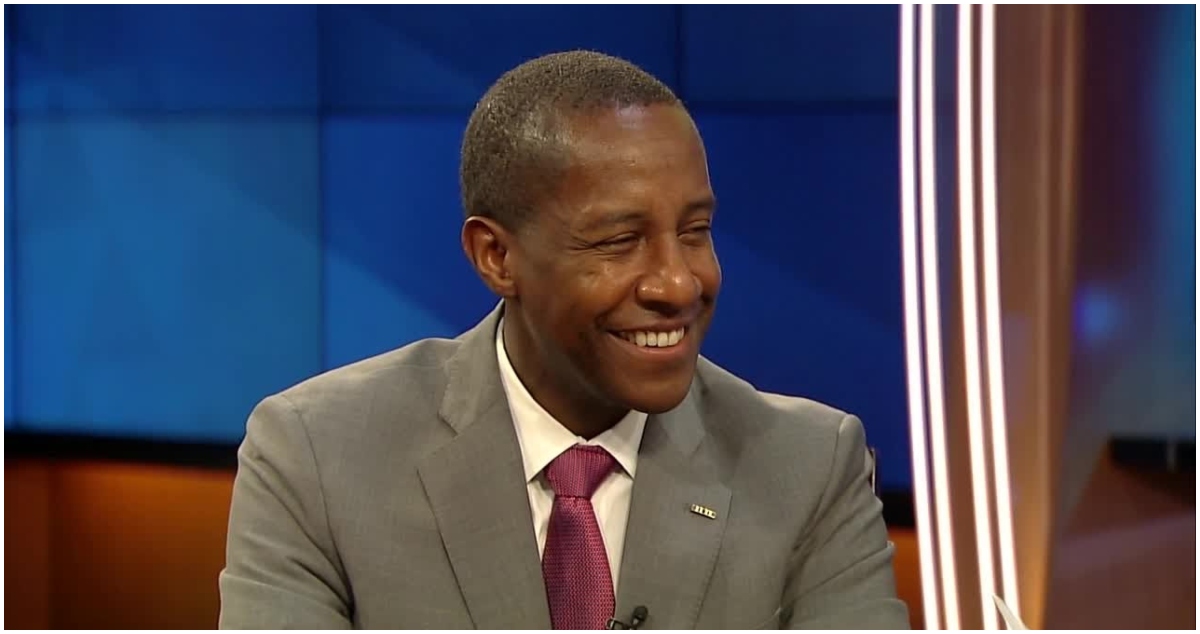
Setti Warren, the first Black mayor of Newton, Massachusetts, and a respected public servant, has died at 55. His death was confirmed by Newton Mayor Ruthanne Fuller, who said he passed away at his home surrounded by family. Warren leaves behind his wife, Tassy, and their two children, Abigail and John.
Warren’s path from student leader to public office reflected his lifelong belief in community connection and perseverance. Before leading Newton, he made history as Boston College’s Undergraduate Government president—an achievement that foreshadowed his trailblazing political career.
Boston College Roots and Early Ambitions
While studying at Boston College, Warren took on an unlikely campaign for student government president in 1991. He was only a sophomore running against upperclassmen at a time when Black students made up just 3.3% of the undergraduate population.
“No one thought I could win that race,” he said in a 2019 interview with The Heights. “I knocked on virtually every dorm room door I could. When I had conversations with people, the sort of dismissiveness came down.”
During his term, Warren launched the Book Tuition Fund, which provided $50 book vouchers to students with high unmet financial aid needs. He also brought filmmaker Spike Lee to campus to discuss Malcolm X, inspiring students through conversations on identity and purpose.
A Political Career Built on Grit and Service
After graduating, Warren built an impressive career in government. He worked in President Bill Clinton’s administration, served as the New England Regional Director for FEMA, and later joined Senator John Kerry’s presidential campaign.
His deep sense of civic duty led him to enlist in the U.S. Navy in 2002. He served as an intelligence specialist in Iraq in 2007—an experience that strengthened his resolve to serve others.
While still deployed, Warren filed paperwork to run for mayor of Newton. Upon returning home, he went door to door—visiting over 11,000 homes—to connect directly with residents. His grassroots approach worked once again, and in 2010, he became Newton’s—and Massachusetts’s—first popularly elected Black mayor.
A Vision for Economic Growth and Equity
During his two terms, Warren focused on improving education, infrastructure, and economic inclusion. He successfully passed an $11.4 million tax override that increased funding for schools and supported the rebuilding of Angier and Cabot Elementary Schools.
In 2016, he launched “Economic Growth for All,” an initiative that brought together Newton city leaders and Boston College faculty to study and address income inequality. “The issue of our time, I believe, is the issue of income inequality,” he said during the project’s unveiling.
Warren’s leadership balanced fiscal responsibility with fairness, aiming to make Newton a more inclusive and equitable city.
From City Hall to Harvard and Beyond
After serving two terms, Warren ran for governor of Massachusetts in 2018, challenging then-Governor Charlie Baker. Although he didn’t win the Democratic primary, he continued shaping civic discourse through academia.
In 2022, he became executive director of Harvard University’s Shorenstein Center on Media, Politics and Public Policy and later served as director of Harvard’s Institute of Politics. There, he mentored future public leaders with the same compassion and energy that defined his own journey.
Warren’s passing marks the loss of a leader who never stopped knocking on doors—literally and figuratively—to make room for others. His life was a testament to the power of persistence, empathy, and vision.