
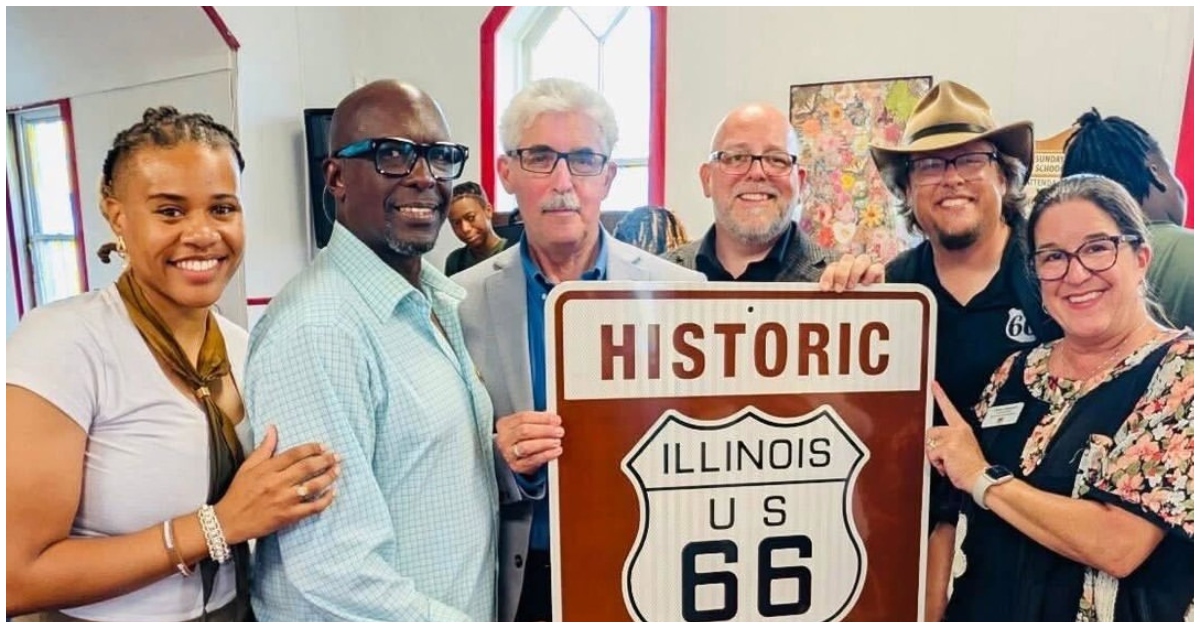
Brooklyn, Illinois, is finally receiving the recognition it deserves after being left off official Route 66 maps for decades. The historic Black community recently received a new Route 66 marker, marking an important step in restoring its place in American history.
Known as America’s first Black-incorporated town, Brooklyn was once a symbol of freedom and self-determination. However, for nearly a century, highways and major developments were built around the town, causing many people to overlook its rich history.
Now, community leaders and preservation groups are working to make sure Brooklyn’s story is seen, remembered, and celebrated for future generations.
Historic Black Town Brooklyn, Illinois Receives Route 66 Recognition After Decades of Neglect
A new Route 66 marker was unveiled on Madison Street in Brooklyn, Illinois. The marker officially recognizes the town’s connection to the famous highway known as the “Mother Road.”
For years, Brooklyn was missing from many Route 66 maps. This happened even though Illinois Highway 3, which passed through the community, served as part of Route 66 between 1929 and 1937.
The town’s return to the map represents more than a sign. It represents a renewed effort to restore a forgotten chapter of Black American history.
“Every good thing needs a foundation, so the Route 66, the unveiling, the unghosting, that’s the foundation that we’ve been waiting for here on Madison Street,” said Brooklyn Mayor Trenton Atkins.
Brooklyn, Illinois Reclaims Its Legacy as America’s First Black-Incorporated Town
Founded in 1829, Brooklyn holds a special place in African American history. The town was created by Black residents seeking independence and a place where they could build their own future.
The community, also called Lovejoy, sits across the Mississippi River from St. Louis. Over time, many transportation projects surrounded Brooklyn while leaving it behind.
As new highways developed, fewer travelers passed through the town. This reduced visibility for a community with deep historical importance.
The recent Route 66 recognition is helping Brooklyn reclaim its identity. Leaders hope the attention will encourage tourism, investment, and greater appreciation for its history.
Route 66 Restoration Effort Highlights Forgotten Black History in America
The Route 66 marker ceremony took place inside Quinn Chapel, one of the oldest Black churches in the Midwest. The church also served as a safe location for people escaping slavery through the Underground Railroad.
The location added deeper meaning to the celebration. It connected Brooklyn’s present restoration with the struggles and achievements of earlier generations.
Bonnie McDonald, president and CEO of Landmarks Illinois, said the event was about correcting a historical mistake.
“We are here to celebrate righting a longtime wrong because Brooklyn has been on Route 66 since its founding and has not been recognized,” McDonald said. “Today is about celebrating the community and making sure the community is recognized.”
Black Community Preservation Efforts Bring New Hope to Brooklyn’s Future
The Route 66 recognition is only one part of Brooklyn’s comeback plan. The village is also expected to receive a new community center and skating rink.
These projects are designed to create more opportunities for residents and visitors. They also aim to strengthen the town’s connection to its historic roots.
Three years ago, Brooklyn was added to Landmarks Illinois’ annual Most Endangered Places list. The designation highlighted concerns about preserving the town’s important landmarks and cultural history.
Today, preservation efforts are giving residents new hope. The community is working to protect its past while creating a stronger future.
Route 66 and Black American History Gain New Recognition
Brooklyn’s story shows the importance of preserving communities that have been overlooked. Across America, many Black towns carry stories of courage, leadership, and survival.
By restoring Brooklyn’s place on the Route 66 map, historians and community leaders are helping more people discover its contribution to American history.
The town’s journey is a reminder that forgotten stories can still be brought back into the spotlight. Brooklyn’s revival represents a powerful example of how communities can reclaim their history and celebrate their legacy.




Leave a Reply