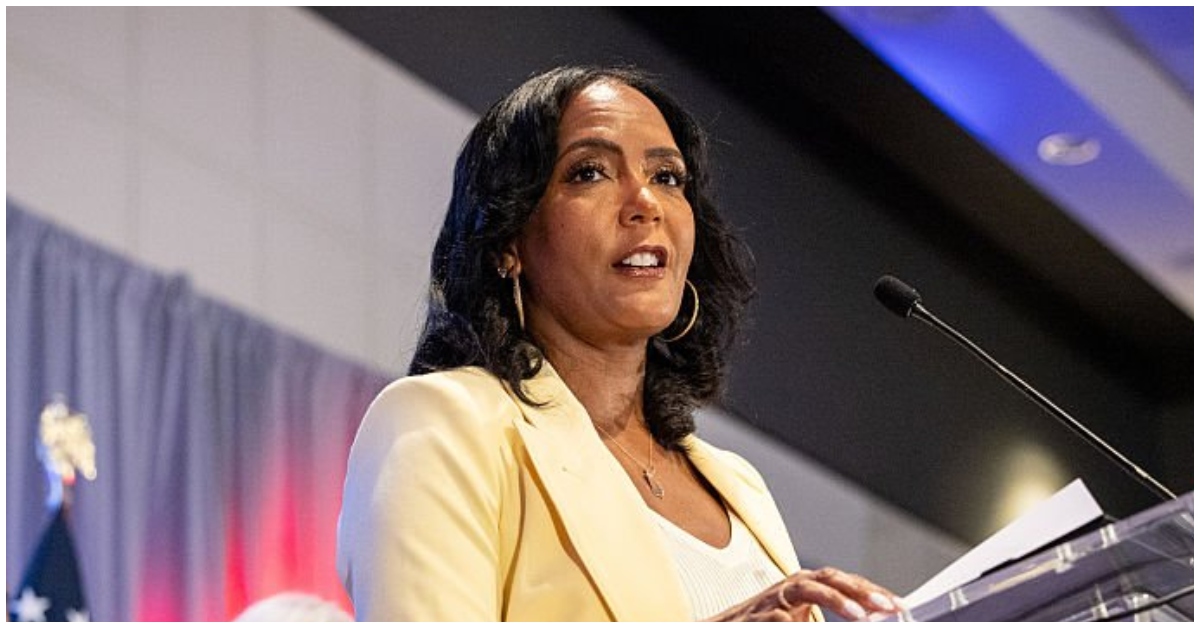
History is not just being written in Georgia this week—it is being rewritten. Former Atlanta Mayor Keisha Lance Bottoms has won the Democratic primary for governor, putting her on the edge of a political milestone that has never been reached in the country. If she wins the general election in November, she will become the first Black woman ever elected governor in the United States.
According to Black Enterprise, Bottoms didn’t just win on May 20, 2026—she won by a convincing stretch. Out of over 1 million votes cast, she secured more than 606,000, which is over 56% of the total vote. This wasn’t a nail-biter. It was a statement from Georgia voters that they are ready for a different kind of leadership in the governor’s mansion.
A Historic Win for a Familiar Face in Georgia Politics
Bottoms is no stranger to high-pressure leadership. She served as the 60th mayor of Atlanta, a role that placed her at the center of major social and public health movements. Her name became known across the country not just for managing city hall, but for her calm, faith-driven responses during crises like the COVID-19 pandemic and the civil rights protests following the murder of George Floyd.
During her election night speech, the room of supporters was not just cheering—they were chanting “KLB,” her initials. Bottoms took the podium with a mix of humility and fire. “I am humbled to be your Democratic nominee for governor of this race,” she told the crowd. She quickly turned the attention back to the people who powered her campaign. “Together, with all of you, we have shown what happens when the people of Georgia show up and believe that their votes are our voice, and that our voices will never be silent.”
How Bottoms Overcame a Crowded Field of Opponents
This was not a two-person race. Bottoms beat out six other hopeful contenders, including some well-known names in Georgia politics. Among them were Jason Esteves, a former state senator; Michael Thurmond, the former CEO of DeKalb County; and Geoff Duncan, a former Republican lieutenant governor who surprised everyone by switching parties. Also in the race were Derrick Jackson, a state representative; Amanda Duffy, a self-described “working class mother”; and Olu Brown, the founder of Atlanta’s Impact Church.
Beating such a diverse and experienced field shows that Bottoms has built a broad coalition of supporters. She drew votes from Black communities, white working-class families, and suburban moderates alike. On the other side of the aisle, the Republican primary is headed to a runoff between Georgia Lt. Governor Burt Jones and Rick Jackson, a billionaire health care executive. That means Bottoms will have several months to build her case to the general election voters before she knows exactly who her final opponent will be.
Faith and Family: The Engine Behind the Campaign
If you listen to Bottoms speak for more than a few minutes, you will hear two things loud and clear: faith and gratitude. In her acceptance speech, she made it plain that her decision to run was not purely political. It was spiritual. “When we launched this campaign, I had no idea where the support and resources would come from. But I repeatedly said, God does not give vision without provision,” she explained to the cheering room.
She went on to describe a quiet moment after the last presidential election, when she prayed for guidance about what she was supposed to do next. “It is that faith that has led me to offer myself as a candidate for governor of this great state,” Bottoms said. That kind of honest, plainspoken talk connects with Georgia voters, many of whom come from strong church backgrounds. Her supporters don’t just see her as a politician. They see her as someone who prays before she makes big decisions.
What a Bottoms Win Would Mean for the Entire Country
It is important to understand just how rare a Black woman governor is in American history. Several Black women have run for governor before. A few have won their primaries. But none have ever won a general election for governor. The closest the country has come was when L. Douglas Wilder became governor of Virginia in 1990, but he is a Black man. Stacey Abrams, another Georgia giant, came within a razor-thin margin in 2018 but did not win.
If Bottoms pulls this off in November, she will shatter a glass ceiling that has held for over 200 years. There are currently only a handful of Black women serving as governor anywhere in the United States—because the number is zero. Bottoms would be the first. That would change the face of American political leadership overnight. Young Black girls across Georgia and the rest of the country would grow up knowing that the governor’s office is not off-limits to them.
The Long Road Ahead to November
Of course, winning the Democratic primary is only half the battle. Georgia has become one of the most competitive states in the country. It went blue for President Joe Biden in 2020 and then elected two Democratic U.S. senators, Raphael Warnock and Jon Ossoff. But Republicans have held the governor’s office for years, and they will fight hard to keep it. The runoff between Burt Jones and Rick Jackson means the GOP is still figuring out its own identity.
Bottoms knows this road well. She has already been through tough elections in Atlanta, a city where politics can be just as rough as any small town. Her experience as mayor, her name recognition, and her ability to speak to voters from all backgrounds give her a real shot. But she will need turnout. She will need volunteers. And she will need the same faith she talks about so openly. As she put it that night, “I am reminded that the grace of God is sufficient.”