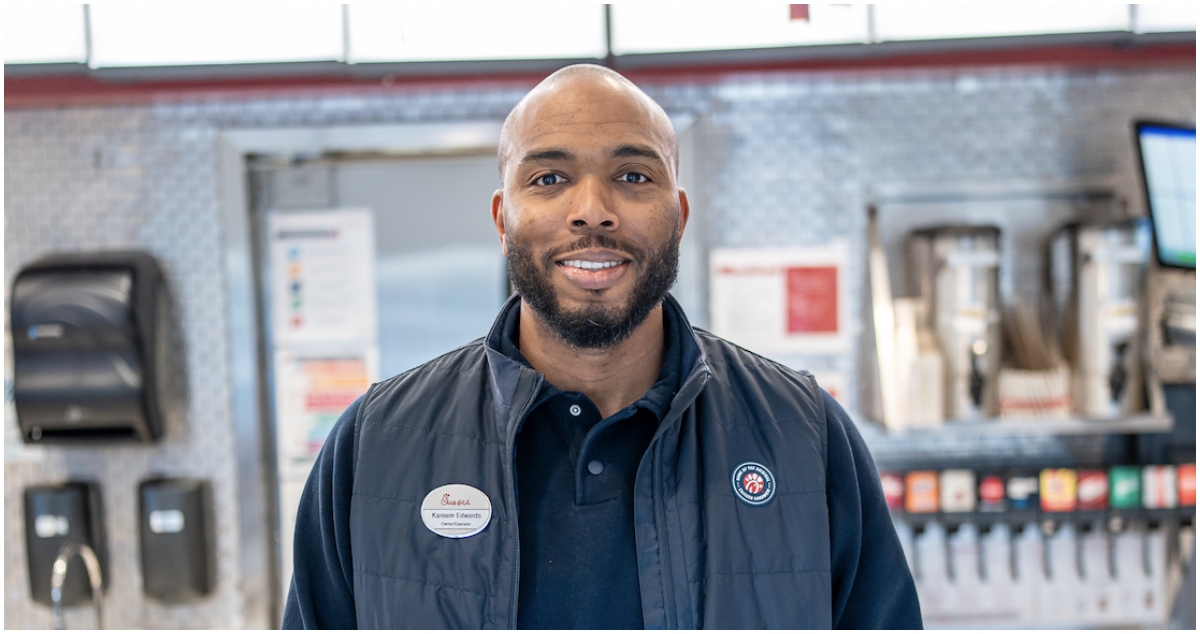
Success in corporate America didn’t stop Kareem Edwards from changing course. After years working at top companies, he walked away from a stable career to open a Chick-fil-A location in Chicago—becoming the first and only Black owner-operator in the city. Today, his restaurant is not just serving food but also creating jobs and investing directly into the community.
Chicago’s First Black Chick-fil-A Owner Builds a Community-Focused Business
Edwards officially became a Chick-fil-A owner-operator in 2021 after leaving his role at Google. His location stands out not just because of its ownership milestone, but because of how it operates. From the beginning, he focused on hiring locally, building a team, and staying deeply involved in the day-to-day running of the business.
Unlike many franchise models, Chick-fil-A requires owner-operators to be hands-on. Edwards embraced that approach fully. He didn’t just manage from a distance—he showed up, worked alongside his team, and made sure the business reflected the needs of the surrounding neighborhood in Chicago.
That approach has paid off. His restaurant employs dozens of local workers and serves as a hub where community members feel seen and supported. For Edwards, the goal was never just profit—it was impact.
From Wall Street to Entrepreneurship: A Bold Career Pivot
Before entering the food industry, Edwards built an impressive corporate résumé. He worked on Wall Street, including time at Lehman Brothers during the 2008 financial crisis, gaining firsthand experience in high-pressure environments.
He later expanded his career into consumer goods and tech. At The Kraft Heinz Company, he helped launch products like Just Crack an Egg, which gained national recognition. His next move to Google placed him in a senior retail partnership role, further strengthening his business expertise.
Despite the success, Edwards felt unfulfilled. He openly admitted that while he was excelling professionally, he wasn’t happy. That realization pushed him to rethink his future and explore entrepreneurship, even if it meant stepping away from stability.
Education and Preparation Shaped His Business Mindset
Edwards didn’t make the leap blindly. His academic journey helped prepare him for the transition. He earned his undergraduate degree in mathematics from DePauw University before later attending the University of Michigan Ross School of Business, where he graduated in 2015.
Business school gave him the tools to think more strategically about ownership and long-term growth. Even so, he didn’t rush into opening a restaurant. Instead, he spent time researching franchise options, comparing brands like McDonald’s and Subway before deciding on Chick-fil-A.
To be sure of his decision, he worked shifts at Chick-fil-A while still employed at Google. That hands-on testing helped confirm that the business model—and the lifestyle—fit what he was looking for.
Investing Back: $50,000 Donation Supports Local Food Programs
Edwards’ impact goes beyond his restaurant walls. In 2026, he donated $50,000 to Just Roots Chicago, a nonprofit focused on food access and education in underserved communities.
The organization works to provide fresh produce through food pantries while also teaching residents how to grow their own food. It even runs a leadership program for young people aged 16 to 24, helping them learn about food justice and sustainability.
By supporting Just Roots Chicago, Edwards is addressing a deeper issue—access to healthy food. His contribution reflects his belief that businesses should play a direct role in improving the communities they serve.
A Business Model Built on Presence, Purpose, and Impact
Edwards’ journey shows what can happen when career success is paired with purpose. He didn’t just open a restaurant—he created a space where business, community, and opportunity intersect.
His decision to leave high-paying corporate roles wasn’t easy. However, it allowed him to build something more meaningful—something that reflects his values and directly benefits others.
Looking ahead, Edwards continues to focus on growth, not just in revenue, but in impact. His story is a reminder that success can look different when it’s rooted in community and driven by intention.