
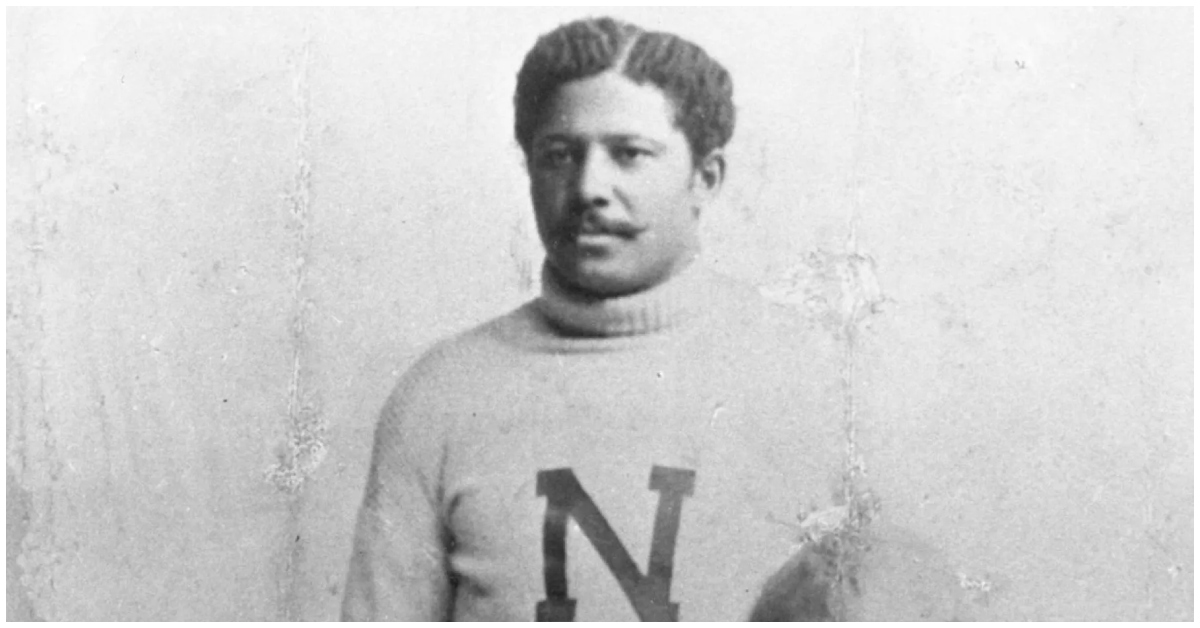
George Flippin’s story stands as a powerful chapter in Nebraska sports history. He joined Nebraska’s football team in 1891, becoming the school’s first Black athlete.
Beyond football, Flippin built a remarkable life as a leader, doctor, and community servant. His journey showed courage during a time when Black athletes faced major challenges in college sports.
Flippin later became Nebraska’s football captain and earned respect both on and off the field. Decades after his playing career, his name continues to represent determination, leadership, and service.
George Flippin Becomes Nebraska’s First Black Football Athlete in 1891
George Flippin made his Nebraska football debut during a 1891 game against Iowa. His appearance marked the beginning of a new chapter for the university’s athletic program.
According to sports historian Arthur Ashe’s book A Hard Road to Glory: A History of the African American Athlete: Football, Flippin was the fifth Black player at a predominantly white university football program.
Flippin was born in Ohio before his family moved to Nebraska. He later earned football letters in 1892, 1893, and 1894 while competing for the Cornhuskers.
George Flippin Faced Racism While Representing Nebraska Football
Flippin’s football career came with serious challenges. His presence on the team created tension with some opponents because of racial discrimination.
In 1892, the University of Missouri refused to play Nebraska because Flippin was on the roster. Missouri forfeited the game, giving Nebraska a 1-0 victory. The conference later required the teams to compete in following seasons.
Flippin also experienced discrimination away from the field. After one game, an Omaha hotel initially refused to serve the Nebraska team because of him. His teammates stood with him and refused to eat there unless Flippin was included.
George Flippin Earned Nebraska Football Captain Role in 1895
Flippin’s leadership abilities earned him the respect of many teammates. In December 1894, Nebraska players elected him captain for the 1895 season.
The decision created controversy within the team. Coach Frank Crawford criticized the choice, saying race was not a factor. One player even threatened to leave and create another team.
However, most players supported their decision. They stood behind Flippin and recognized his leadership on the football field.
Today, Flippin’s name appears on Nebraska’s captain’s wall for the 1894 season, recognizing the year players selected him for the role.
George Flippin Continued His Legacy Through Medicine and Community Service
After leaving Nebraska, Flippin continued playing football. He spent two seasons with the semi-professional St. Joseph Tigers in Missouri from 1895 to 1896.
He later attended the Chicago School of Physicians and Surgeons. After completing his medical education, Flippin returned to Stromsburg, Nebraska.
There, he joined his father, who was also a doctor. Together, they opened a hospital and provided healthcare services to the community.
Dr. George Flippin Served His Community With Compassion
Flippin became known for his dedication as a physician. Accounts describe him making home visits even during difficult weather conditions.
His commitment to patients showed the same determination he displayed during his football career. He focused on helping people regardless of the challenges around him.
Flippin died after becoming ill with pneumonia. He was later buried in Stromsburg, where he remains the only Black person buried in the city’s cemetery.
George Flippin’s Legacy Continues Through Nebraska Football History
Flippin’s impact extends beyond his football statistics. He represented courage, leadership, and service during a period when opportunities for Black athletes were limited.
His story also helped create a path for other Black athletes at Nebraska. Players such as William M. Johnson, Robert Taylor, Wilbur Wood, and Clint Ross followed after him.
Flippin’s journey remains an important reminder that athletic achievements can influence communities far beyond the playing field. His legacy connects sports, education, medicine, and leadership.




Leave a Reply