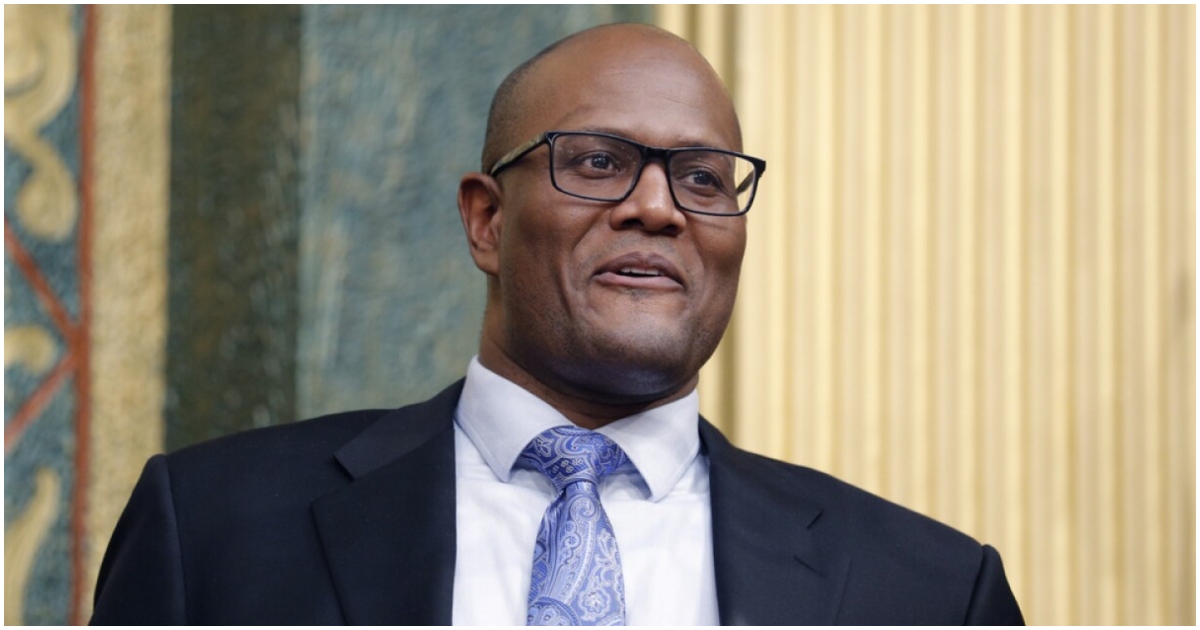
Joe Tate Ends Senate Campaign to Focus on New Opportunities
Joe Tate, the first Black speaker of the Michigan House of Representatives, has officially ended his run for the U.S. Senate. The Detroit Democrat announced the decision on Thursday, saying he wants to move “in a different direction of service.”
Tate entered the race earlier this year but faced steep fundraising challenges compared to his Democratic rivals. U.S. Rep. Haley Stevens, state Sen. Mallory McMorrow, and public health leader Abdul El-Sayed all reported far higher totals in recent filings. Tate’s campaign brought in about $193,000, while Stevens alone raised $2.8 million.
Fundraising Gap Made Campaign Difficult
Despite months of connecting with voters, Tate’s financial disadvantage made it difficult to compete in one of the nation’s most high-profile Senate contests. Stevens transferred $1.5 million from her previous House campaign, McMorrow raised $2.1 million, and El-Sayed brought in $1.8 million.
Meanwhile, Tate’s reported cash on hand stood at about $70,000 as of June 30. “The past three months have been wonderful, just to touch base with Michiganders,” he said. His campaign exit leaves three Democratic front-runners in the race to replace retiring U.S. Sen. Gary Peters.
Considering Reelection to the Michigan House
Tate said he is now considering a run to keep his Michigan House seat. He stepped down as speaker after Republicans gained a majority in the November election. His leadership as speaker was historic, marking the first time an African American held the role in Michigan.
As speaker, Tate became known for his calm leadership style and his firm stance against divisive rhetoric. In 2024, he made headlines by saying he would not allow the House to be a place for “racist, hateful and bigoted speech.”
A Competitive Senate Race Still Ahead
The 2026 Senate race remains highly competitive. Republicans are working to defend their majority, with former U.S. Rep. Mike Rogers already in the race. Rogers came close to winning in 2024, losing to Democrat Elissa Slotkin by just 19,000 votes.
This time, his path appears clearer after GOP U.S. Rep. Bill Huizenga decided not to run. Rogers’ campaign has already reported raising about $1.2 million as of June 30.