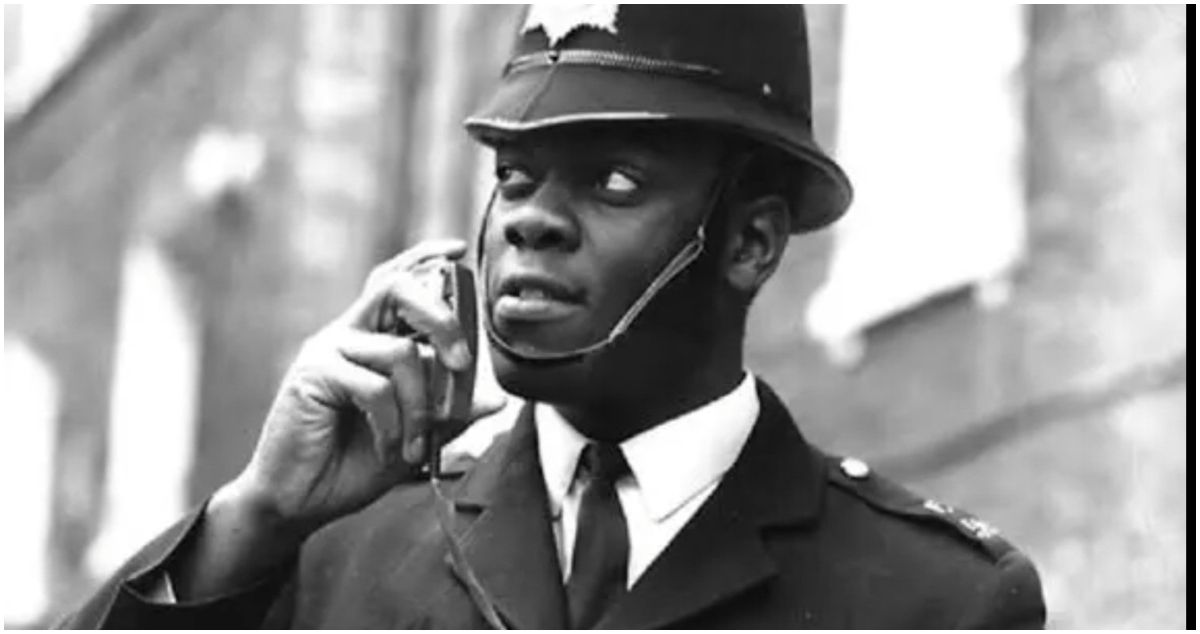
A Milestone Birthday for a British Policing Pioneer
Norwell Roberts, the first Black officer to serve in London’s Metropolitan Police, is celebrating his 80th birthday — a moment that symbolizes both personal triumph and social progress. His life and 30-year career stand as a testament to courage, perseverance, and service under immense pressure.
When Roberts joined the Met in 1967, he entered a force of over 27,000 officers as its only Black recruit. What should have been a proud achievement soon revealed the harsh reality of racism within the ranks. Yet, despite years of hostility, isolation, and daily indignities, he endured and paved the way for generations of Black and ethnic minority officers across Britain.
Today, as the nation honors him, Roberts continues to inspire younger officers who follow his trail. “They were never going to beat me,” he once said, reflecting on the painful but defining years that shaped his career and legacy.
Facing Racism and Isolation in the Early Days of the Met
Roberts’s first day as PC590 at Bow Street Police Station was unforgettable for the wrong reasons. His reporting sergeant hurled a racial slur and vowed to ensure he never passed probation. It was a harsh introduction to a system that wasn’t ready for diversity.
During his early years, Roberts was spat on, had tea thrown at him, and found matchsticks jammed into his car door keyhole. Fellow officers sometimes mocked or insulted him in public. “Who do I confront?” he later asked. “There were 27,000 police officers and I was the only Black one.”
Despite the abuse, he refused to quit. His resilience became a quiet act of resistance, proving that excellence could outlast prejudice. Over time, he earned respect not only from the public he served but from a force that would later recognize his strength and service.
Rising Through the Ranks and Redefining Strength
Born in Anguilla, Roberts moved to England at nine to live with his mother in Bromley, South London. Early encounters with racism — from being excluded from grammar school to being bullied by classmates — gave him a clear-eyed understanding of what he would later face in uniform.
After leaving school at 15, Roberts worked as a laboratory technician before applying to the Met. Once accepted, he excelled through training and proved himself on the job, eventually rising to the rank of detective sergeant. His professionalism and discipline became his defense, even as he struggled privately with loneliness.
He found solace in his work and a sense of purpose in public service. The community treated him better than some of his colleagues, and his calm authority earned the respect of Londoners across backgrounds.
Honors, Faith, and Freemasonry
In recognition of his courage and contributions, Roberts received the Queen’s Police Medal in 1996, presented by Prince Charles at Buckingham Palace. It was a fitting tribute to a man who had endured so much yet continued to serve with integrity and pride.
Outside policing, Roberts embraced Freemasonry in 1985, rising through its ranks with the same discipline that guided his police career. “It’s like being a thespian,” he said of the rituals. “You can put so much into it.” During the pandemic, he called up to 20 people a day to support those in isolation — a reflection of his lifelong commitment to service.
Now, as the Metropolitan Police celebrates his legacy, Roberts’s story will be displayed at the new police museum opening on the site of his former station at Bow Street — the very place his journey began.
A Lasting Legacy of Courage and Character
Looking back, Roberts remains proud of the path he carved. “I’d do it all again,” he said. “I was the first Black police officer, and the first Black man to do 30 years in the force. I got the Queen’s Police Medal, and I did it all at the sharp end.”
His example continues to inspire a new generation of officers who serve a far more diverse Britain than the one he joined in 1967. His life story is a reminder that progress often begins with one person’s courage to stay the course — even when standing alone.