The trailblazing violinist broke racial barriers and inspired generations of musicians.
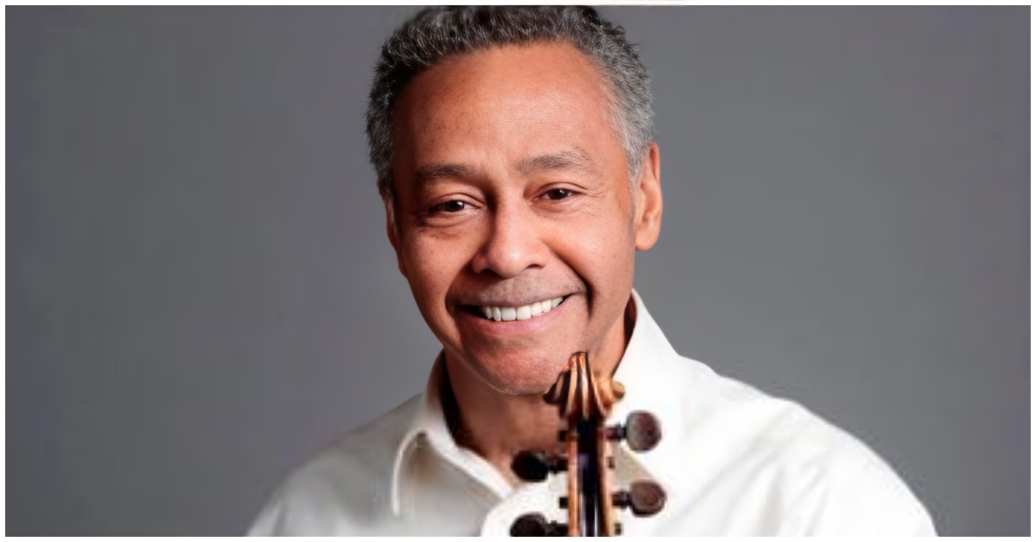
Booker Rowe, a celebrated violinist and pioneer in classical music, has passed away at age 85. He died on July 31 from complications of pneumonia and sepsis. His death occurred at Jefferson Abington Hospital in Philadelphia.
Rowe made history in 1968. He became the first Black musician to perform with the Philadelphia Orchestra. The invitation came from famed music director Eugene Ormandy. He served as a substitute violin during the 1968-69 season.
He returned permanently in 1971. He then became the orchestra’s second full-time Black member. His career with the orchestra spanned an incredible 49 years. He retired in 2020.
A Career That Broke Barriers in Classical Music
Rowe’s journey to the Philadelphia Orchestra was groundbreaking. Classical music had few Black musicians at that time. His presence opened doors for others.
He described his first rehearsal in a 2020 interview. “I sat myself down on the last stand to play,” he recalled. “The sound was amazing. It was like stereo all around me.”
The stage had a downward slant. “When the brass and winds would play I had to brace myself,” he said. “It was just so beautiful.”
His experience highlights the power of perseverance. He faced challenges but remained dedicated. His talent ultimately won recognition.
Performing With Legends and Global Leaders
Rowe performed with numerous elite conductors over five decades. He traveled the world with the orchestra’s second violin section. His performances took place at prestigious venues.
He played at the Academy of Music in Philadelphia. He performed at Carnegie Hall and Lincoln Center in New York. The Mann Center and Saratoga Performing Arts Center also hosted him.
He performed at the 1993 World Series at Veterans Stadium. He played for Pope Francis in 2015. The orchestra toured Europe, South America, and Asia.
A historic 1973 tour took the orchestra to China. They performed 10-day, five-concert cultural exchange. Rowe brought back Chinese instruments from a commune visit.
In 2008, he mingled with former Secretary of State Alexander Haig after a Beijing concert. He also posed with Chinese welcoming officials in Shanghai in 2013. “Booker was such a kind soul,” said Yannick Nézet-Séguin, the orchestra’s music director.
A Life Rooted in Music From Early Childhood
Rowe was born in Lexington, Kentucky, on December 10, 1940. He moved to North Philadelphia at age two. His family filled their home with music.
His father was a singer. His mother played piano. They encouraged his classical music education.
He began piano at age five. He started violin at age 11. He became concertmaster for his high school orchestra.
He also led the All-City high school orchestra. He earned a bachelor’s degree from Temple University in 1963. He completed a master’s degree at Yale University in 1968.
Mentoring Young Musicians and Championing Diversity
Rowe taught at Settlement Music School. He gave private lessons to many students. He mentored dozens of colleagues throughout his career.
He championed racial and ethnic diversity. He worked with the orchestra’s cultural diversity initiative. He sought out works by Black and minority composers.
He encountered racist incidents during his early years. He reflected on this in a 1981 interview. “The time was right for an Afro-American,” he said. “It was just a matter of finding somebody who was ready.”
His legacy continues to inspire. A friend said on Facebook: “His legacy and historical contributions are unparalleled.”
Playing With Pop Stars and Community Groups
Rowe’s musical talents extended beyond classical orchestras. He freelanced with many famous entertainers. He played with Sammy Davis Jr. and Isaac Hayes.
He performed with Smokey Robinson and the Supremes. He played with Barbra Streisand and Aretha Franklin. These experiences showed his versatility.
He also performed with local groups. He played with the Symphony Club of Philadelphia. The Lansdowne Symphony Orchestra featured his talents.
He gave dozens of free concerts for children. He performed for churches and community events. He participated in scholarship fundraisers regularly.
A Warm Presence and Devoted Family Man
Colleagues remembered Rowe fondly. Ryan Fleur, orchestra president, called him “a warm and steadying presence.” His “million-dollar smile” was well-known.
He met his wife, soprano Patsy Baxter, at an orchestra concert. They married in 1970. They raised a son, Landis, and daughter, Vivian.
The family lived in Center City and East Mount Airy. They also lived in Germantown. They often visited family in Kentucky and Tennessee.
He enjoyed puzzles and hiking. He loved kayaking with his family. He practiced tai chi regularly.
His daughter remembered him fondly. “He was very fiery and lovable,” she said. “He was always who he was. He was one of a kind.”
Wise Words for Future Musicians
In 2019, Rowe offered advice to young musicians. A video interview captured his wisdom. He shared it for the Philadelphia Orchestra website.
“Practice, practice, practice,” he told them. “But also enjoy, enjoy, enjoy.” He emphasized finding joy in music.
“Do it with love in your heart,” he advised. These words reflect his philosophy. Music was both discipline and passion.
His life demonstrated this balance. He worked hard but also found joy. His legacy lives on through those he inspired.