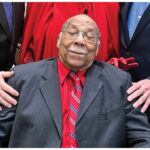
A Lasting Tribute to Bill Collins
Colorado football honored the late Bill Collins, its first full-season Black captain, before a recent home game. Collins passed away in July at age 76 after a battle with cancer. As the Buffaloes prepare for their Big 12 opener in his hometown of Houston, his memory stands strong among teammates, family, and fans.
His wife, Esther Collins, described the moment as both emotional and powerful.
“It was bittersweet because the reality is that we were there because my husband is not here, but to be loved and shown so much love… it was life changing for his children as well as his grandchildren,” Esther told The Denver Gazette.
Bill Collins’ Journey to Colorado
Collins grew up in Houston and was overlooked by major colleges. Determined to pursue football, he wrote letters to coaches nationwide. Only Colorado and Purdue responded. At 17, Collins boarded a train for Denver in 1966 to join the Buffaloes as a walk-on freshman.
Coach Eddie Crowder quickly recognized his potential. When Collins said he could not afford to return without financial support, Crowder awarded him a scholarship. That decision changed both Collins’ future and Colorado football history.
Leading With Strength and Unity
By his senior season in 1969, Collins had earned respect as a leader on and off the field. Teammates voted him captain, making him the program’s first full-season Black leader. He shared captain duties with Bobby Anderson, a future College Football Hall of Famer, and Mike Pruett.
Former teammate Bobby Anderson praised Collins’ ability to unify players.
“Bill was really instrumental in helping us understand the culture and the brotherhood of the Black players, but at the same time, as a captain, he unified all of us together, Black and White,” Anderson said.
Facing Racism at the Liberty Bowl
The Liberty Bowl at the end of the 1969 season became a defining moment. Colorado faced an all-white Alabama team in Memphis, less than two years after the assassination of Dr. Martin Luther King Jr.
Collins recalled racial slurs and hostility from Alabama players and fans. At the coin toss, Anderson and Pruett stepped back, allowing Collins to represent Colorado alone. Alabama sent more than 40 players forward in an attempt to intimidate him.
“That’s why Bill’s out there,” Anderson explained. “We wanted them to know how important he was to us and how important our Black brothers were to us.” Colorado went on to win 47-33.
Life Beyond the Field
After football, Collins built a successful career at Xerox in Texas, working his way up to an executive role before retiring in 2006. Yet his bond with Colorado never faded. His closet was filled with Buffs gear, and he proudly wore his Buffaloes hat, even during chemotherapy treatments.
He also introduced his family to Colorado, which he considered a second home. “His dream and his goal was to take every child to Colorado,” Esther said.
Family and Teammates Carry His Legacy
Last weekend, Collins’ wife, three children, and many grandchildren traveled to Boulder for the first time since his passing. They joined teammates Bobby Anderson and Eric Harris in honoring his life. Esther represented Colorado during the coin toss, echoing her husband’s symbolic role more than five decades earlier.
Former teammate Eric Harris believes Collins’ story holds timeless lessons.
“Listening to one another and giving each other another chance… the lessons learned can be applied to many situations and not just football,” Harris said.
Bill Collins’ leadership, courage, and love for the Buffaloes continue to inspire new generations, both in Colorado and back home in Houston.