
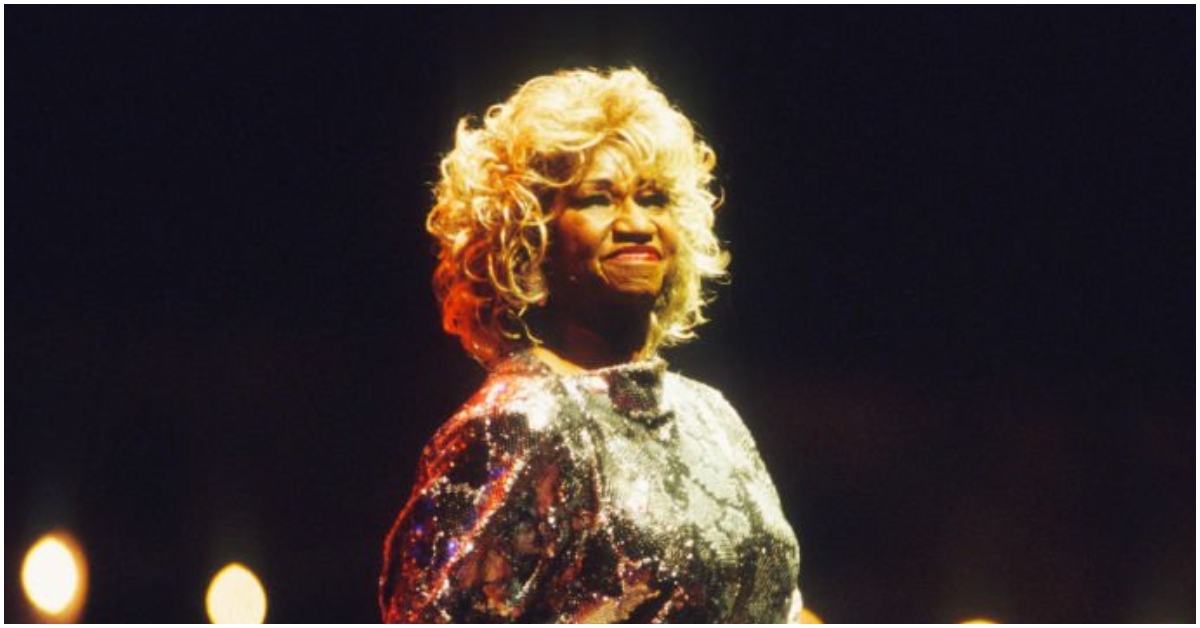
The Queen of Salsa is finally getting her crown from the Rock and Roll Hall of Fame. Celia Cruz, the legendary Afro-Cuban singer who sold over thirty million records worldwide, has been named as a 2026 inductee in the Musical Influence category. This honor recognizes artists whose original style and sound have directly shaped rock and roll and broader popular music.
Cruz is one of the best-selling Latin artists of all time. Her powerful voice became the sound of freedom for many Cuban immigrants after the Cuban Revolution. She also helped shape and popularize the Afro-Cuban guaracha style, while playing a major role in the creation and global rise of salsa music. Hits like “Quimbara,” “La Vida es un Carnaval,” and “La Negra Tiene Tumbao” remain anthems decades after their release.
This induction is historic not just because of Cruz’s immense talent, but because of who she was: one of the first Afro-Cuban women to lead a global music movement. At a time when Latin music was often pushed to the margins of the American music industry, Cruz pushed back with nothing but her voice, her vibrant image, and her unforgettable catchphrase: ¡Azúcar!
From Havana Cabarets to Global Stages: Her Early Years
Celia Caridad Cruz Alfonso was born in Havana, Cuba, as one of fourteen children. She found her voice early by singing lullabies to her younger siblings. As a teenager, she began performing at local cabarets, even though singing careers were heavily discouraged in her community. But Cruz was defiant. She did not listen to the doubters.
She kept pursuing music, singing in radio contests until she got her big break with the band Sonora Matancera. Cruz became their lead singer and stayed with them for fifteen years. That experience shaped her into a fearless performer who could command any stage. She learned how to blend Afro-Cuban rhythms with guaracha, son, and other styles long before salsa had a name.
Her time with Sonora Matancera also taught her how to connect with audiences on a deep emotional level. She was not just singing songs. She was telling stories of love, struggle, and joy. Those early years in Havana laid the foundation for everything that came next.
Exile, Freedom, and a New Beginning in the United States
After Fidel Castro seized power in Cuba in 1959, everything changed. Cruz chose to leave her homeland and immigrated to the United States. For her and many other Cuban artists, exile was painful. But it also became a source of artistic fire. Her music took on new meaning: it became the voice of love and freedom for a displaced community.
Once in the U.S., Cruz embarked on a solo career. In 1966, she was handpicked by the legendary Tito Puente to perform with his orchestra. Together, they collaborated on four albums. That partnership introduced Cruz to wider Latin audiences in New York and beyond. Yet her true commercial success was still just around the corner.
That breakthrough came when Cruz teamed up with Johnny Pacheco of Fania Records. Fania was the Motown of salsa, and this partnership was a match made in heaven. The 1974 album Celia & Johnny and its lead single “Quimbara” propelled Cruz straight into the mainstream. From that moment on, she was no longer just a Cuban star. She was a global icon.
The Queen of Salsa and Her Lasting Musical Influence
What made Cruz so special? First, her voice. It was powerful, joyful, and impossible to ignore. Second, her style. She wore bright colors, bold headpieces, and unforgettable heels. But most importantly, she brought Afro-Cuban rhythms to audiences who had never heard them before. She did not water down her sound. She made people come to her.
Her influence stretched far beyond salsa. Rock and roll artists, pop singers, and even hip-hop producers have sampled or cited Cruz as an inspiration. She showed that you could sing in Spanish and still pack arenas in English-speaking countries. She proved that a Black woman from Havana could become one of the most beloved entertainers on the planet.
Even after her death in 2003, Cruz kept winning. She was awarded a Grammy for Best Salsa/Merengue Album for the posthumous release Regalo del Alma. In total, she won three Grammy awards and four Latin Grammys. Most notably, the Recording Academy gave her a Lifetime Achievement Award in 2016. Her legacy was further cemented with inductions into the Billboard Latin Music Hall of Fame and the International Latin Music Hall of Fame.
Why the Rock and Roll Hall of Fame Honor Matters Now
The Rock and Roll Hall of Fame has often been criticized for overlooking Latin artists and women of color. That is why Cruz’s induction in the Musical Influence category feels so important. It is not just a trophy. It is an official acknowledgment that salsa, Afro-Cuban music, and guaracha are part of the same family tree as rock and roll.
Furthermore, the Smithsonian Institution hosted a major exhibit about Cruz in 2005 titled after her famous catchphrase, ¡Azúcar! That exhibit celebrated her life, her fashion, and her music. Now, the Rock Hall is adding its own stamp of approval. For fans who have loved Cruz for decades, this feels like long-overdue justice.
But beyond the awards and the headlines, Cruz’s story remains one of courage. She left her homeland, built a new life, and never stopped singing. She turned pain into rhythm and exile into art. That is the very definition of musical influence. And now, the world gets to honor her properly.





Leave a Reply